Chapter-14
The disappearing steam locomotives
The Iron Horse- Smoke billowing from the chimney, the deafening hiss of steam sweeping along the track, the crankshaft-connecting rod- crank pin assembly converting reciprocating motion into rotary one, the cow- catcher, the glistening brass, the ornate dome, the smell of grease & oil wove a magical appeal and captivated the imagination of the railway travellers and the onlookers alike.
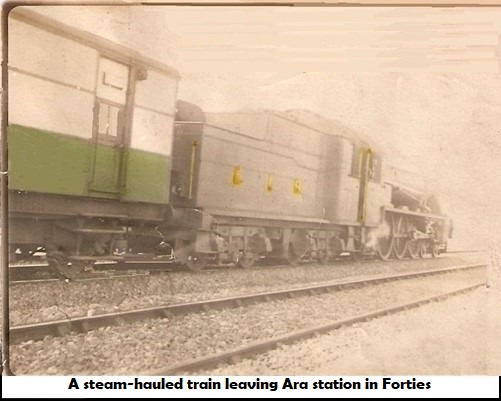
Unfortunately, the tractive power and speed of a steam locomotive is limited on the principle of thermodynamics as applied to the external combustion engine. Its operating conditions are very exacting as substantial time is spent in preparing it for work and servicing in between trips. Its overall efficiency is low compared to diesel locos worked by internal combustion engines and electric locos drawing power from the overhead equipment. Thus, it had to make rooms for faceless diesel and electric locos.
The last ‘Black beauty’ contest was held at Asansol in 1993.

The steam traction was completely done away with on the Indian railway in 1995. The last steam loco which ran between Ferozpur and Jallandher was received at the Rail Transport Museum, New Delhi on the 3rd January 1996 for preservation. The Indian railways undertook large scale auction sale of steam locos in the wake of earlier-than-anticipated closure of steam services. Some of the locos were also offered outright sale on ‘as it is where it is’ basis. The scrap dealers dismembered them and sold them, making a fortune for them and in turn benefitting the Railway. But there were some “friend of railway” societies who retrieved steam locos from the scrap yard and refurbished them to their original livery for preservation and periodical run on otherwise unpopular lines.
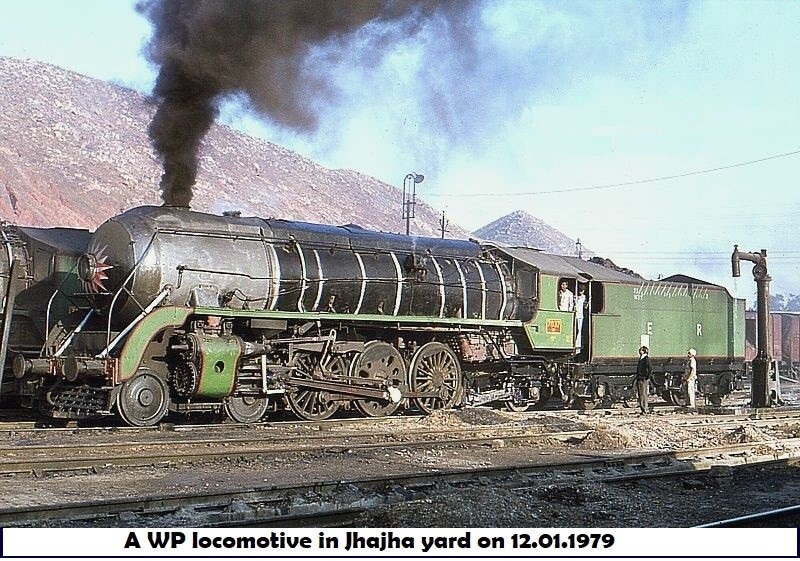
WP locomotives- It was a class of steam locomotive used in India having wheel arrangement of 4-6-2 (representing 4 leading wheels on two axles-6 powered & coupled wheels on three axles-2 trailing wheels on one axle) and generally known as ‘Pacific’ type. It was introduced after World War II for passenger duties, marking the change from 'X' to 'W' as the classification code for Broad gauge locomotives. The class was designed specifically for low-calorie, high-ash Indian coal and capable of attaining a speed upto 110 Kmph. They were easily recognized by their cone-shaped bulging nose which accommodated the headlight. The Indian railways sourced more than thousand locomotives from countries like USA and Canada, and a couple of hundred numbers from Poland. 259 locomotives were manufactured at Chittaranjan Locomotive Works (CLW). The WP was Indian railway’s choice locomotive in the 1960s and 1970s and had the distinction of hauling prestigious trains such as the ‘Taj Express’, the ‘Grand Trunk Express’, ‘Howrah-Madras’ Mail, ‘Frontier Mail’ and the ‘Air Conditioned Express’. The entire WP class remained intact into the 1980s. Some WPs remained in service until the 1990s. Nine have been preserved. Including 2 at the National Rail Museum, New Delhi. WP 7200 after undergoing thorough overhauling at Amritsar works in April 2015 is now kept at Rewari shed near New Delhi for steam excursion.

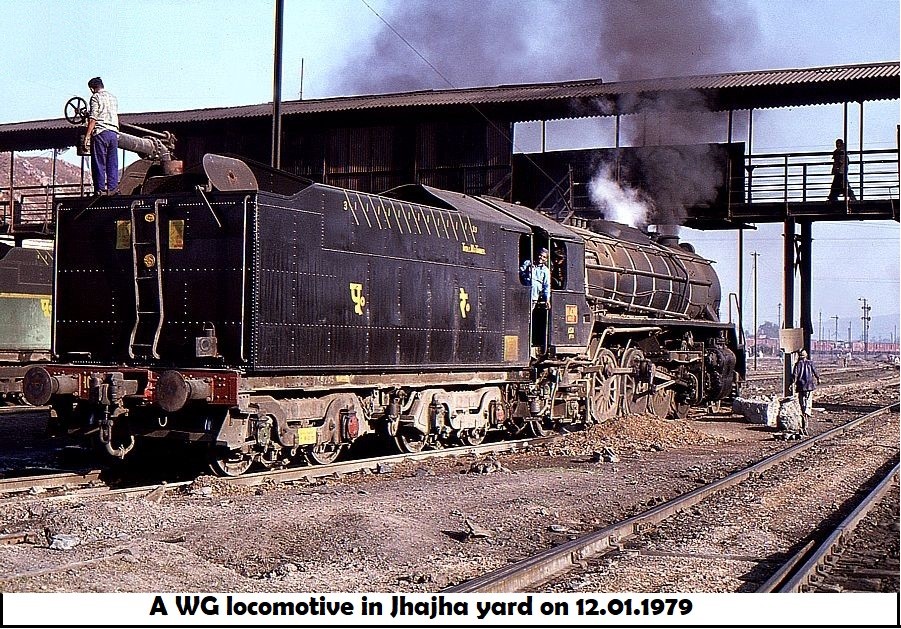
WG locomotives- The Indian Railways WG class was a type of broad gauge 2-8-2 goods locomotive introduced in the 1950s. With a tractive effort of nearly 40,000 lbs and potential of attaining speeds of about 90 kmph they were viewed with awe and regarded as ‘freight workhorse’. The first hundred units were built in England. Number 8350 was exhibited at the Festival of Britain in 1951. However, a small number were also sourced from France, Austria and japan. Over 2000 of the class were built between 1950 and 1970 at. Chittaranjan Locomotive Works (CLW). Eight locomotives of this class are now preserved, including the first one WG 8407 "Deshbandhu" and the last one WG 10560 "Antim Sitara” at CLW.
Fairy Queen—It is the oldest surviving loco in perfect order in the world manufactured by ‘Kitson, Thompson & Hewitson’ of Leeds (UK) for the East India Company. This underslung tank loco was used for hauling light passenger trains between Howrah and Raniganj (121 miles) in 5 hours. It was withdrawn from service in 1909.The loco was back in service between New Delhi and Alwar taking a lucky few down memory lane on the wheels of nostalgia. The National Rail Museum, Delhi-Established in 1977 it showcases country’s rich railway heritage including working or retired locomotives, historic coaches, obsolete railway equipment, scale models and interactive displays. NRM also features a miniature
train which is a scaled-down version of a real train . It chugs along winding track within the museum premises and remains a great attraction for railway enthusiasts, history buffs and families with kids, providing an entertaining and educational experience.
Digitization of NRM archives is being done. Regional heritage museums, heritage gallery and heritage rooms have also been set up at a number of stations. Howrah station rail museum opened in 2006 contains a section dedicated to the heritage and history of Howrah station. It houses the steam engine HPS 32 which belonged to the erstwhile East Pakistan Railway & captured by the Indian Army during Indo-Pak war of 1971.
The treasure trove at Rohtas Industries Limited, Dalmianagar-- The complex was a repository of vintage steam locomotives, both Broad gauge and Narrow gauge. The formers operated for interchange of load between the RIL complex and Dehri-On-Sone station. The latter worked trains on the Narrow gauge (2 ft 6 inches) line from Dehri-On-Sine to Tiura Pipradih (about 70 Kms). Opened in 1911 this railway ran on the western flank of the river Sone and passed through rich limestone & marble reserve of Rohtas district. There was a spur (2.5 Kms) from Rohtas station to the historic Rohtas Fort. The line was owned & managed by the Dehri-Rohtas Light Railway (DRLR), a subsidiary unit of the Rohtas Industries Limited (RIL). For want of patronage and sustained loss the line was closed in 1984. The RIL went into liquidation and its assets vested in the Government of Bihar. The track, signalling gears and the rolling stock of the closed DRLR were sold. Of the closed line, a 35 Kms length from Dehri to Banjari (short of Rohtas) was sanctioned in the rail budget of the year 2008 but the project is languishing for want of funds. The Government of Bihar took possession of the assets of the Rohtas Industries (RI) at Dalmianagar (the paper factory, sugar factory, vanaspati oil factory, cement factory etc) and put them on auction sale. I was happy to learn that the Railway participated in it and succeeded in acquiring the premises of the RI in 2007. Two projects were sanctioned for this area in the year 2008 viz. (i) A wagon POH factory & (ii) A wagon bogie and coupling factory. To make a beginning the Railway put the plants & machineries of the extinct RI to auction sale. I had learnt about existence of the steam locomotives of the erstwhile DRLR in Dalmianagar complex. Alarmed at this unsavoury development I thought of doing something so that the stabled steam locomotives at Dalmianagar were spared from the outrage of dismemberment and eventual doom. I accordingly wrote to the GM/ECR requesting him to protect the threatened species. I was relieved to ascertain from the subsequent auction notice published in the newspaper that the steam locos would not come under the purview of the auction sale. DRLR was a hotspot for Narrow Gauge enthusiasts from England. It had perked the curiosity of one Lawrence Marshall who visited India over 25 times between 1970 and 1995 to capture the last days of steam trains in India. During one of his visits he devoted time on Ara- Sasaram Light Railway and the DRLR. Brian Manktelow decided to unravel the fate of the extinct DRLR during his visit of India in 1994. It was an unannounced chance visit in of January. Upon his entry in the loco depot he found a fantastic time warp on the whole place. He speaks of 2 tender locos and 7 tank locos derelict and at different stages of mechanical undress .Some locos were stripped down beyond restoration.
Display of dwindling steam locomotives at other places--Selected Broad gauge, metre gauge and narrow gauge steam locomotives duly restored to their original glory have been installed on pedestals at many zonal Hqrs, divisional Hqrs, workshops and important railway stations for display. Many who had faint memory of steam days are fascinated by getting close to the preserved locomotives. Some of them are described below.
Patna Jn station:- YP 2805 displayed at entry of the station is a Metre gauge

locomotive manufactured by TELCO, Jamshedpur in 1964. Named ‘Sabarmati’ it worked on the Western Railway till 1998. In its final resting place at Patna Jn it has been assigned the name of ‘Sabarmati ka Sant’
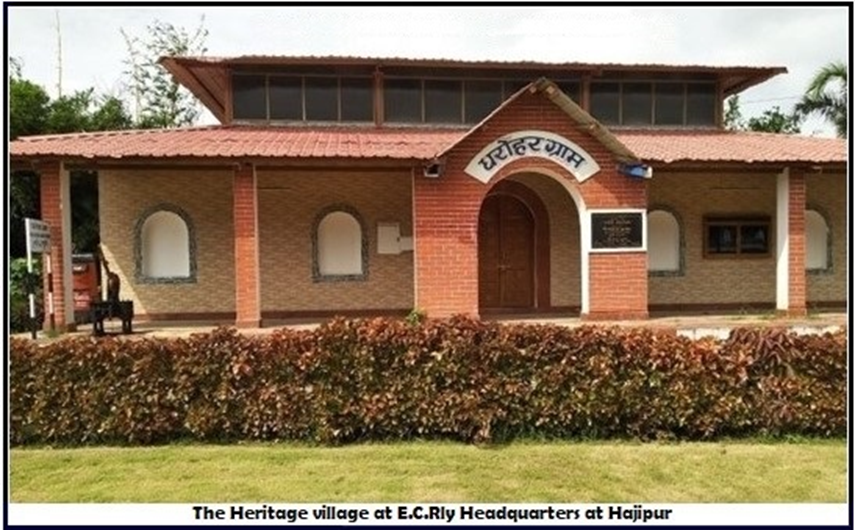
ECR headquarters/Hajipur--A narrow gauge steam locomotive has been displayed. It bears a plate with the word ‘JUNG’ inscribed on it. RI had purchased 6 locomotives built by ‘Arnold Jung Lokomotivfabrik’, Kirchen, Rhineland (Germany) during the period 1953-1957. This locomotive with wheel configuration of 0-6-0 may be one of them.

Dhanbad- N.G. loco AK 7 operating on Ahmedpur-Katwa section of the E. Rly appears here.

Danapur-- E.I.R loco WP 34308 installed in the premises of the DRM office is a Broad gauge locomotive built by HEADWRIGHTSON & CO Ltd, England in 1894.

Muzaffarpur station--RIL-06 is a Broad gauge steam locomotive with wheel arrangement of 0-6-4 plinthed in the station premises. This loco was built by the Vulcan Foundry, England in 1908 for the East Indian Railway where it worked till 1967. Thereafter it was acquired by the RIL, Dalmianagar.

Samastipur station -A Narrow gauge locomotive of the same make as one installed at the E.C.Rly headquarters/Hajipur is preserved at this station.

Samastipur DRM office- YP 2001 metre gauge loco manufactured by North British Locomotive Company in 1953 is displayed here.

Rajendranagar (Patna)—The vintage Broad gauge loco WG 9673 manufactured in 1953 is exhibited here. The loco has the honour of hauling Toofan Express between Jhajha & Patna. It was finally withdrawn from service on 9th February 1992.
Darbhanga—The Metre gauge loco bearing number 253 displayed in the station premises was manufactured in England in 1913. It was a multipurpose loco which was lying forgotten and uncared in an abandoned siding. Giving it an honourable place may help in promotion of heritage culture.
Sonepur—Broad gauge Heritage steam loco WP 7581 from the Loco shed Sonepur has been preserved in the premises of DRM Sonepur office.
Heritage Transport Museum, Tauro, Haryana--The locomotive RIL-2.1 is a 1953 Broad gauge JUNG steam loco (0-6-0) found in derelict condition at the RI, Dalmianagar by the proprietor of this private museum ,who took pains to acquire it from the Railway in 2016. The forgotten loco was transformed into a shiny new smoke spewing wonder after 64 years to promote and introduce the magic of the bygone era of steam trains to the present generation.
A rail museum in making
World heritage assets- The Indian Railways is the proud owner of four UNESCO accorded World heritage sites viz (i) Darjeeling Himalayan Railway (1999)
Nilgiri Mountain Railway (2005) (iii) Kalka-Shimla railway (2008)
(Iv) Chhatrapati Shivaji Maharaj Terminus, Mumbai (2004)